
Enhance Your Teaching with NBS Dance Courses

Teacher Training Program

Courses for Dance Teachers

Enrich your dance teaching education

NBS’ Continuing Professional Development (CPD) courses offer dance teachers the opportunity to further invest in their practice, embrace the opportunity for lifelong learning and add to their existing teaching qualifications.


To view a list of course offerings for Continuing Professional Development (CPD) Click Here. 


If you are interested in learning more about CPD, please email the TTP Administrator at ttp.admin@nbs-enb.ca.

Course Highlight - Healthy Dancer

New this year!


Developed and delivered by NBS’ Director of Research and Health Dr. Rachel Bar, the course explores dancer health and wellbeing, providing practical and research-informed insights for dance educators. Key topic areas include, child and adolescent development, goal setting and motivation, growth related injuries, sport nutrition and eating disorder prevention, neurodiversity in the studio and more.

Curriculum and Pedagogy Courses

Pedagogy I Cecchetti - PED 202

Wednesdays and Fridays (11:00am – 12:30pm)

This course provides an in-depth pedagogical study of the graded levels for the Cecchetti Method (Cecchetti Canada).

National Associate – PED 204

Mondays and Thursdays (11:00am – 12:30pm)

Taught in conjunction with National Advanced I (see full description under Ballet and Dance Courses)

Community Dance I – PED 102

Wednesdays (1:15pm – 2:45pm)

This course explores the fundamentals of Community Dance, a practice that engages people of all ages, abilities, aspirations, and states of health. Students will learn how accessible, inclusive dance practices have the potential to strengthen community and benefit individuals (e.g., social inclusion, physical literacy, range of motion). Specific areas of focus include creative movement, dance in public schools, Adaptive Dance, and dance for older adults, including those with cognitive and or physical disability. Given this broad range of topics, this course should be considered an introduction to each of these unique areas of practice.

Academic and Theory Courses

Anatomy – ATP 101

Mondays and Wednesdays (4:45pm – 6:15pm)

An in-depth study of functional human anatomy and physiology. This course provides a basic investigation of the structure and function of the human body using a systems approach, functional and kinesthetic understanding of the musculoskeletal system, and considerations related to dance injury prevention.

Music I – MUS 101

Mondays (3:00pm – 4:30pm) and Thursdays (1:15pm – 2:45pm)

This course introduces concepts from music theory and develops the foundational skills required to work with live piano accompaniment and recoded music in a dance studio environment. Students will develop their musical awareness and knowledge through the study of the Baroque and Classical eras and musical forms and styles common within ballet repertoire. While the course is primarily focused on Western musical tradition, it also includes elements related to global and Indigenous musical forms.

Music II – MUS 201

Mondays (3:00pm – 4:30pm)

This course further develops concepts from Music I, particularly as they relate to practical applications in the dance classroom and communication with a musician. Appreciation of the late Classical, Romantic, and 20th Century music is developed, and the study of music for ballet class is expanded to include complex rhythms, unusual meters, an expanded vocabulary of dance forms, and use of the ballet repertoire.

History of Ballet I – HST 101

Tuesdays (1:15pm – 2:45pm)

This is the first year course traces the development of ballet as a Western European art form, with roots in ancient Greece and Rome, through its emergence in the courts of Western Europe and as a theatrical art form up to the end of the Romantic period in the late 19th century. Major developments in the art form will be explored in the context of the social and political conditions of the time in which these developments occurred.

History of Ballet II – HST 201

Mondays (9:15am – 10:45am)

This second-year course continues the examination of the development of ballet with an emphasis on the emergence of the Classical style. It also examines important innovations championed by the impresario Sergei Diaghilev through his company, Les Ballets Russes. The further develops theoretical foundations for the study of dance history and takes a sequential, period-based approach to time, starting with the decline of ballet in Western Europe (circa 1830) to the death of Diaghilev and the global influence of Pavlova (circa 1929/30). The impact of these historical influences will be studied in relation to the social, political, cultural, geographical and aesthetic context. The course will encourage critical debate about aspects of ballet history that may be problematic today. Special reference to historical influences on the development of dance education in Canada will also be integrated where relevant.

History of Ballet III – HST 301

Wednesdays (1:15pm – 2:45pm)

This is the third year of a three-year course that examines the history of ballet. In this final year, the course will continue with an examination of developments in Europe and North America from the mid-twentieth century to the present day. As in the first two years, the creative artists responsible for the developments will be considered as well as the social and political contexts in which the developments occurred. The course will also examine current issues in the ballet world.

Benesh Movement Notation – ATP 102

Tuesdays (8:30am – 10:30am)

Devised by Rudolf and Joan Benesh, Benesh Movement Notation is widely used in the recording and restaging of dance works, where it has proved invaluable as a tool in the rehearsal studio and as a means of preserving dance heritage. Exploring the basic components of the Benesh system, students will learn to read notated classical ballet exercises and variations and gain basic notation writing skills.

Healthy Dancer – ATP 301

Wednesdays (1:15pm – 2:45pm)

Dance educators are responsible for creating positive learning environments that empower dancers to reach their full artistic potential, support them in navigating the rigors of training, and contribute to holistic wellbeing. This course explores aspects of physical, mental, and emotional health in dance training, covering
topics such as child and adolescent development, nutrition, equity and belonging, performance enhancement, and stress management.

Ballet and Dance Courses

RAD or Cecchetti Intermediate – DNC 102

Mondays, Tuesdays and Thursdays (11:00am – 12:30pm)

Please note that Cecchetti Intermediate runs in term I and RAD Intermediate will run in term II.


This course provides an in-depth study of the Intermediate vocational level of both the Royal Academy of Dance (RAD) and Cecchetti Method (Cecchetti Canda). Through active class participation, students will build an in-depth embodied knowledge of the material of each syllabus. The course may also prepare students for externally assessed examinations. Participation in external examination is based on student interest and/or as prerequisite to teaching qualification with the RAD or Cecchetti Canada.

RAD or Cecchetti Advanced I – DNC 202A OR DNC 202B

RAD Advanced I – Wednesdays and Fridays (9:15am – 10:45am) Cecchetti Advanced I – Tuesdays and Thursdays (1:30pm – 3:00pm)

This course provides an in-depth study of Advanced I level vocational level of either the Royal Academy of Dance (RAD) or Cecchetti Method (Cecchetti Canada). Through active class participation, students will build an in-depth embodied knowledge of their chosen syllabus and further develop their individual technical and artistic proficiency. The course may prepare students for externally assessed examinations. Participation in external examination is based on student interest and/or as prerequisite to teaching qualification with the RAD or Cecchetti Canada.

National Intermediate – DNC 103

Thursdays and Fridays (9:15am – 10:45am)

This course provides an in-depth study of the Intermediate syllabus of the Imperial Society of Teachers of Dancing (ISTD) National Branch and begins the study of graded syllabus work. The syllabus covers a range of European folk dances with a focus on embodied practice and the study of historical and cultural contexts. The course may prepare students for externally assessed examinations with the ISTD. Participation in external examination is based on student interest and/or as prerequisite to teaching qualification with the ISTD.

National Advanced I/Associate - DNC 204 and PED 204

Mondays and Thursdays (11:00am – 12:30pm)

Building on the learning from National I, this course centers on the Advanced I syllabus of the Imperial Society of Teachers of Dancing (ISTD) National Branch and completes the study of the graded work. The syllabus covers a range of European folk dances with a focus on embodied practice and the study of historical and cultural contexts. Through this course, students may opt to pursue Associate teaching qualifications with the ISTD.

RAD Advanced II - DNC 302B

Wednesdays and Fridays (9:15am – 10:45am)

A course based on the syllabus of the Royal Academy of Dance Advanced II Level. Participation in the externally assessed examination is not a requirement and entry into an external exam is determined in consultation with the course instructor. A successful external examination allows the student to apply for Associate status with the RAD. Artistry and technical application are an integral part of the course. A successful result with a mark of Distinction allows continuation to the Solo Seal level and gives the candidate an opportunity to participate in the Margot Fonteyn International Ballet Competition, if they meet the age requirement.

Cecchetti Advanced II - DNC 302A

Tuesdays and Thursdays (1:30pm – 3:00pm)

This is primarily a practical course that covers the Advanced II level of the Cecchetti method. Students must have studied the Cecchetti Intermediate and Advanced I material to be eligible for this class. Students are expected to actively participate and perform the set materials, resulting in a thorough understanding of the syllabus. Teaching points will be included for those who may become qualified to teach at this level in the future. Students who have gained sufficient technical and artistic proficiency in this Cecchetti work may be eligible, with permission of the instructor, for an externally assessed examination by Cecchetti Canada. Participation in this externally assessed exam is not a course requirement.

More Professional Development Opportunities

TTP(0).webp

Teacher Training Program

Start the next chapter in your dance educator journey in Canada's National Ballet School’s Teacher Training Program—a world-renowned program that prepares teachers to inspire dancers of all ages, abilities and aspirations.

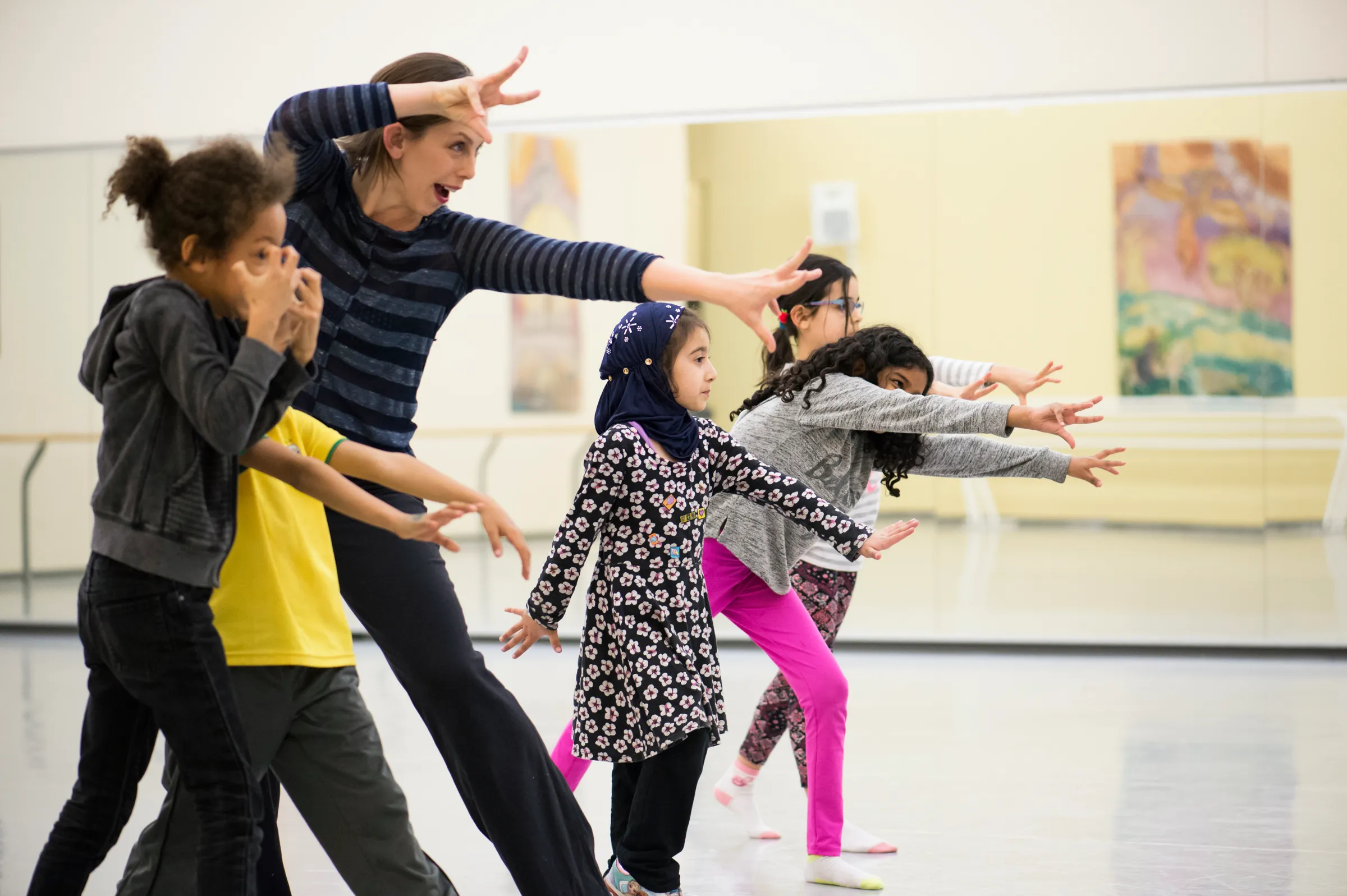
A teacher leads a creative movement class

Educator Resources and Courses

Bring the joy of dance to your classroom! Our ongoing courses and resources for educators will support you in preparing to engage your students through dance.

DSC_0527_lead.webp

LEAD

Regional and national leadership workshops empowering young women ages 16-25 to make a difference through dance!

Let's get
In Touch

Have questions for us about continuing professional development for dance teachers? We would love to hear from you. Complete the email form and our Teacher Training Program Artistic Administrator will get back to you with more information.